Men’s Mental Health Month: Why We Need to Talk Before It Becomes a Crisis
June is Men’s Mental Health Month, and I think it is worth saying something plainly: a lot of men are not okay.
Not because they are weak. Not because they are failing. Not because they are not trying hard enough.
A lot of men are struggling because, for many of us, we were never really taught how to talk about what hurts. We were taught to keep going, stay useful, work harder, be tough, provide, don’t complain, and deal with it quietly.
The problem is that silence does not make pain disappear. It just makes it heavier.
-
Men are very good at isolating each other, often through very tough moral or value standards.
Let’s face it, men can have some pretty bad habits: ghosting, poor communication, avoiding hard conversations, and disappearing when things get uncomfortable.
Sometimes friendship groups also create unspoken rules about what is acceptable to talk about. For example, if someone is going through a divorce but their friendship group is strongly anti-divorce, that person may not feel safe opening up. They may already feel judged before they have even said anything.
That is how men become isolated while still being surrounded by people.
I think one of the hardest parts of men’s mental health is that so much of it can look normal from the outside. Someone can be studying, working, showing up, helping others, making jokes, going to the gym, replying to messages, and still be fighting a battle that no one else can see.
-
June is also Pride Month, and I think it is important to acknowledge that men’s mental health does not look the same for everyone.
Some men are also carrying the weight of identity, rejection, isolation, shame, or not feeling safe to be fully themselves. Some have had to hide parts of themselves just to be accepted, included, employed, respected, or loved.
If we are serious about men’s mental health, then our support needs to include all men — gay, bi, trans, queer, asexual, gender-diverse, and anyone who has ever felt they had to shrink themselves to fit into someone else’s idea of what a man should be.
Men should not have to perform toughness, silence, or emotional distance to be accepted.
They should be allowed to be human.
-
That is why I think we need to get better at checking in properly.
Not just “how are you?” in the passing, automatic way.
But actually asking:
“How are you really going?”
“Are you coping?”
“Do you need support?”
“Do you want to talk, or do you just need someone to sit with you for a bit?”
And we also need to make it easier for men to answer honestly.
Support is not just sending a text and hoping that is enough. Sometimes it means showing up. Helping with something around the house. Going for a walk. Grabbing dinner. Sitting with someone. Doing something practical that makes life feel a little bit easier.
Sometimes people do not need a solution. They just need to feel like they are not alone.
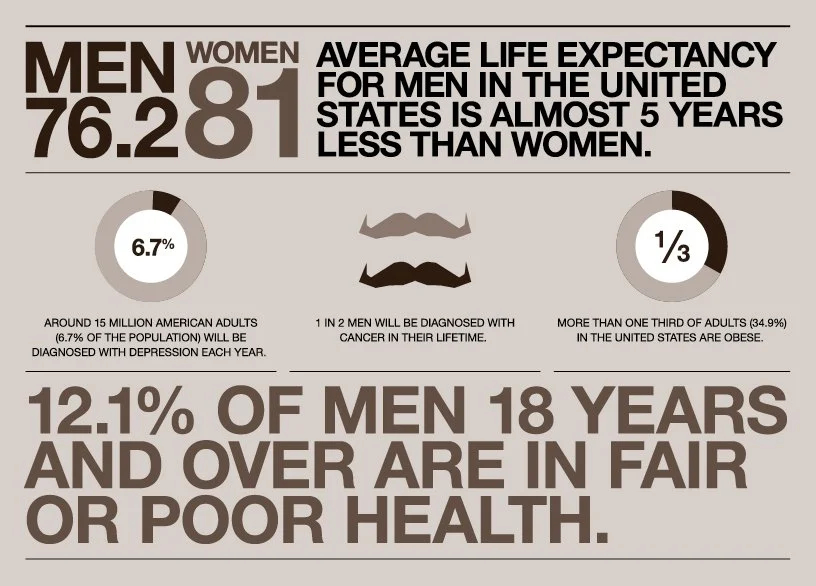
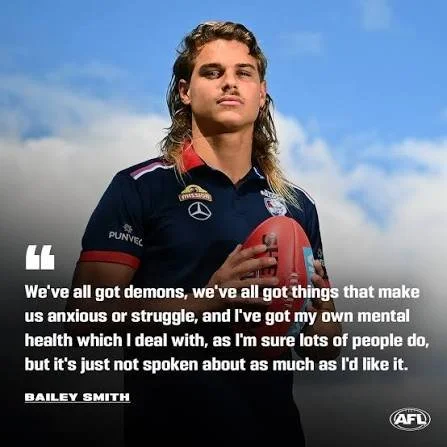
Bailey Smith speaking openly about anxiety and mental health — a reminder that even people who look confident and successful can be carrying things privately.
Image/quote credit: AFL / Bailey Smith
-
When someone finally says, “I’m not okay,” that moment matters.
It is not drama. It is not attention-seeking. It is not weakness. It is someone trusting you enough to let you see behind the mask.
I know from my own life that mental health is not always neat or easy to explain. Sometimes it is grief. Sometimes it is trauma. Sometimes it is burnout. Sometimes it is loneliness. Sometimes it is the pressure of trying to hold everything together when you feel like you are falling apart inside.
And sometimes it is just being tired — deeply, painfully tired — from carrying things for too long.
Now, I’ll be honest. When I have talked about the impact mental health has on me, I have sometimes heard things like, “Maybe you should go part-time,” or comments along those lines.
I understand that people might mean well, but this is part of the stigma we need to remove.
When someone is depressed or struggling, comments like that can land as, “Maybe you are not capable.” Even if that was not the intention, that can be the impact.
Before arguing against that, it is worth remembering that you are talking to someone who is already carrying a lot. They probably do not need to feel excluded, reduced, or pushed to the side because they were vulnerable.
Most of the time, people want to feel part of something. They want support, understanding, and connection — not to feel like their honesty has made them less capable or less welcome.
-
For me, I think part of healing is learning that strength is not just pushing through.
Strength is also knowing when to slow down, when to ask for help, when to set boundaries, and when to admit that something is hurting.
That is not weakness.
That is survival.
And eventually, hopefully, it becomes recovery.
-
Men’s Mental Health Month should not just be a campaign we acknowledge once a year.
It should be a reminder that we all have a role to play in creating safer spaces for men to be human.
At university.
At work.
In friendship groups.
In families.
In sport.
In leadership.
In everyday conversations.
We do not always need to have the perfect words. Sometimes the most powerful thing we can do is notice someone, listen without judgement, and remind them they are not a burden.
-
Looking after mental health does not need to become another overwhelming checklist.
Sometimes the best place to start is with a few simple things that are actually achievable.
Move your body.
Not perfectly. Not obsessively. Just regularly. A walk, the gym, swimming, sport, stretching, or getting outside can all help reduce stress and support mood.Stay connected.
Isolation can make things heavier. Even one honest conversation, one walk with a mate, or one person checking in properly can make a difference.Protect the basics.
Sleep, food, sunlight, routine, and getting support early all matter. They do not fix everything, but they help give your brain and body a better chance.None of this means mental health is just about “trying harder”.
It is not.
But small, consistent things can help keep us steady — especially when life gets heavy.
Read more here: https://www.blackdoginstitute.org.au/resources-support/wellbeing/improve-wellbeing/lifestyle/
-
For anyone wanting practical guidance on how to support a mate who might be struggling, Movember has a useful mental health resource here:
https://au.movember.com/mens-health/mental-health
Their approach is simple and practical: ask, listen, encourage action, and check in.
That is something we can all do better. Not perfectly. Just more honestly and more consistently.
-
To any man who is struggling this month: you are not broken.
You are not less of a man because you are finding things hard.
You deserve support, connection, rest, and a life that feels worth living.
And to the people around them: check in. Properly. More than once.
Because sometimes one honest conversation can be the thing that helps someone hold on.
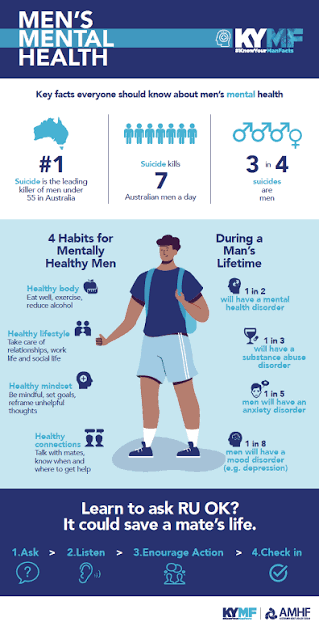
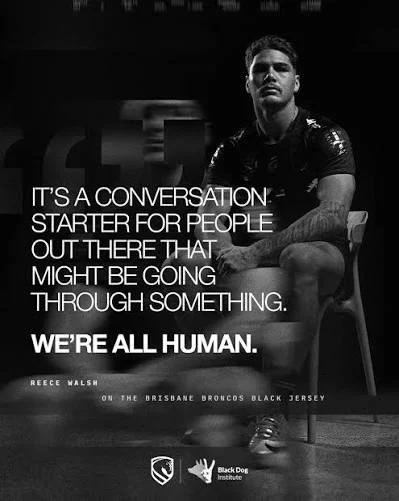
Reece Walsh for the Black Dog Institute’s conversation-starting campaign — a simple reminder that everyone is human, and checking in can matter more than we realise.
Image/quote credit: Brisbane Broncos / Black Dog Institute / Reece Walsh